
Have you ever turned on your hot water, expecting a refreshing shower, only to be greeted by a smell akin to rotten eggs? If you’ve encountered this unpleasant surprise, the culprit might be hiding inside your water heater—specifically, the anode rod.
This small but crucial component plays a big role in protecting your water heater from corrosion. But when things go wrong, it can lead to that dreaded smell. Imagine stepping into your bathroom, only to be overwhelmed by a foul odor.
It’s not just an inconvenience; it can make everyday tasks like bathing or washing dishes unbearable. You deserve to enjoy every drop of hot water without any offensive scents. Understanding why your water heater anode rod might be causing this problem is the first step towards reclaiming your comfort and peace of mind. You’ll discover why your water heater anode rod can lead to a rotten egg smell and what you can do to fix it. From simple solutions to professional advice, we’ll guide you through everything you need to know to restore the freshness in your home. Don’t let unpleasant odors control your living space; learn how to tackle this issue head-on. Your home deserves to smell as clean as it feels.
Page Contents
Causes Of Rotten Egg Smell
The anode rod in a water heater stops rust. It does this by attracting corrosive elements. But sometimes, it causes a rotten egg smell. This happens when the rod reacts with water. The reaction makes hydrogen gas. This gas mixes with sulfur bacteria. The mix creates a bad smell. The smell is like rotten eggs. Anode rods made of magnesium are more likely to cause this smell. Aluminum rods might be better if the smell is strong.
Chemicals in water make the heater smell. The anode rod reacts with these chemicals. This reaction creates hydrogen gas. The gas is harmless but smells bad. Sulfur bacteria in the water use this gas. They make hydrogen sulfide gas. This gas smells like rotten eggs. Regular checks can help stop the smell. Changing the rod might help too.
Water quality affects the smell in the heater. Water with high sulfur or minerals causes problems. This water creates more hydrogen sulfide gas. This gas smells bad. Well water often has more sulfur. City water usually has less. Testing water can show sulfur levels. Filters or treatment systems can help improve water quality.

Credit: www.aricoplumbing.com
Identifying The Source
Rotten egg smell means trouble with your water heater. The anode rod can corrode over time. Look for rust on the rod. This means it’s wearing out. Water may turn cloudy or discolored. These are signs of a problem. Check the rod regularly. Replace it to stop the smell.
Sulfur bacteria can make water smell bad. Test the water for bacteria. Take a sample and send it to a lab. This helps find if bacteria is present. Chlorine can be used to treat the water. Kill the bacteria and stop the smell. Use filters to keep water clean.
Inspect the water heater parts. Check the tank for rust. Look at the pipes and valves. Make sure they are clean. Flush the tank to remove dirt. This keeps the heater running well. Regular maintenance can prevent bad smells. Keep an eye on parts and replace worn ones.
Preventive Measures
Rotten egg smell from water heaters often comes from the anode rod. Replacing it with an aluminum or zinc alternative can help. Regular maintenance ensures fresh-smelling water.
Choosing The Right Anode Rod
Selecting the correct anode rod is crucial. Magnesium rods are common but can cause odors. Consider using aluminum-zinc rods. They reduce the rotten egg smell. Always check the rod material before buying. Make sure it suits your water type.
Regular Maintenance Tips
Regular checks are vital. Inspect the anode rod twice a year. Replace it if worn out. A good rod protects the heater. Clean the tank to prevent smell. Use vinegar for cleaning. It helps remove buildup.
Water Treatment Options
Consider treating your water. Water softeners can help. They reduce minerals causing odor. Activated carbon filters are another option. They remove impurities. Ensure your water is safe and smells fresh.

Credit: www.amazon.com
Solutions To Eliminate Smell
The anode rod is a part of the water heater. It can cause a rotten egg smell. Replacing it can help. Use a new magnesium or aluminum rod. These rods work better. They prevent the smell. Make sure to check the rod every few years. This keeps the water fresh.
A powered anode is a good choice. It does not use metal. It uses electric power instead. This stops the smell. Powered anodes last longer too. They need less maintenance. They are a bit more costly. But they solve the smell issue well.
Flushing the system helps remove bacteria. Bacteria can cause the smell. Use a hose to drain the tank. This cleans the inside. Do this at least once a year. It keeps the heater working well. It also keeps water fresh.
Long-term Management
Water quality affects the smell from your heater. Check it often. Use a simple test kit to see if your water is clean. This helps find problems early. Clean water keeps the heater smelling fresh. Testing is quick and easy. Make it a regular task.
Install a good filtration system. This removes bad stuff from water. Filters stop sulfur from causing bad smells. Choose a filter that fits your needs. Change filters regularly to work well. Clean water is important for a good home.
Ask a professional to check your water heater. Experts know how to spot issues. They give good advice on maintenance. Regular checks help avoid big problems. Listen to their tips for keeping water fresh. Expert help can save you money in the long run.
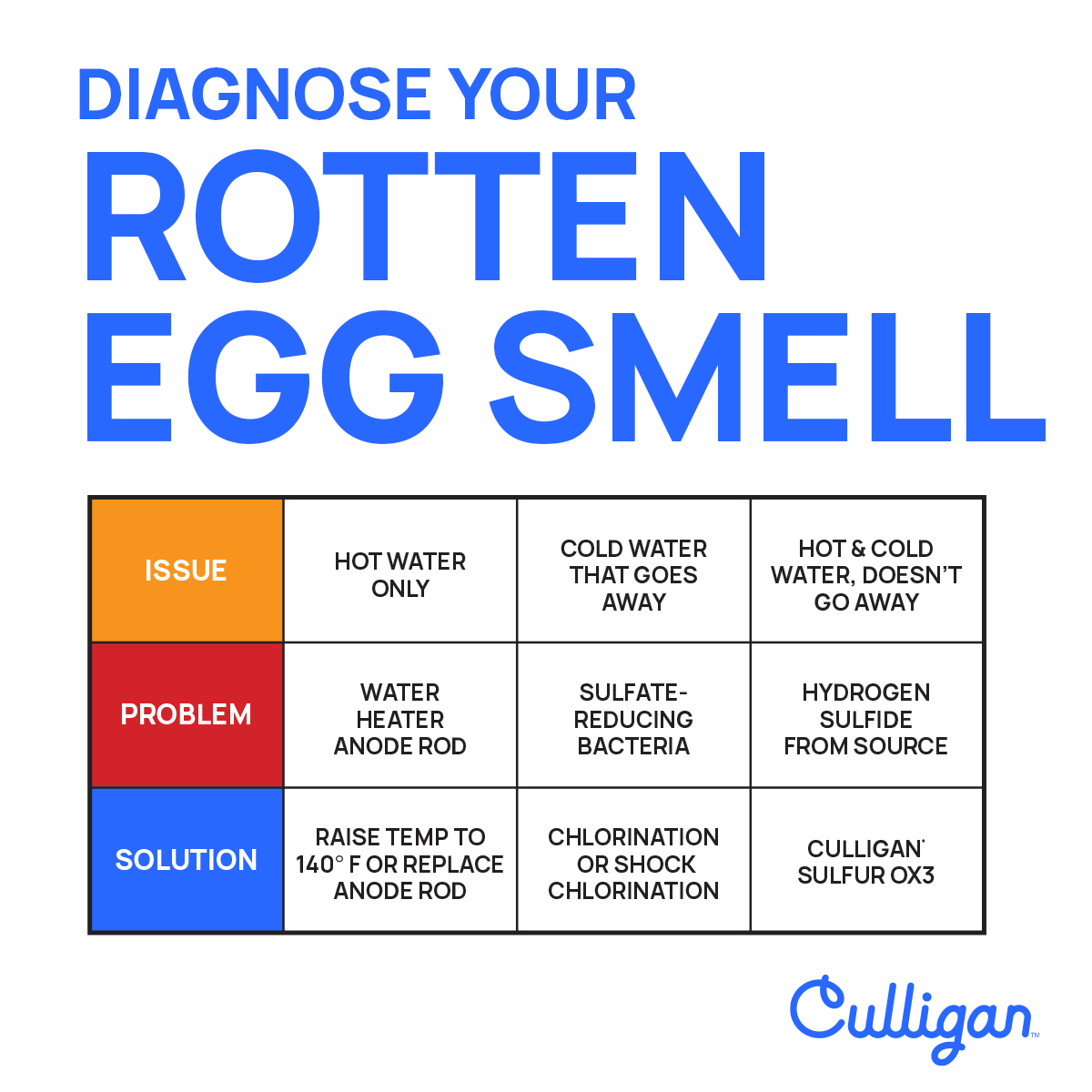
Credit: culliganventura.com
Conclusion
Solving the rotten egg smell is simple. Check your water heater’s anode rod. Replace it if needed. This can stop the unpleasant odor. Regular maintenance prevents issues. Keep an eye on your water heater. Clean and inspect it often. This helps ensure fresh-smelling water.
A little effort saves time and hassle later. Enjoy clean water and peace of mind. No more rotten egg smell. Your home stays fresh and welcoming. Make water quality a priority. It’s worth the care and attention. Your senses will thank you.