
Frozen pipes can cause expensive damage, but the right heat cable can provide targeted protection before temperatures drop. This roundup compares 10 self-regulating options in different lengths, wattages, and installation formats.
Use the buying guide below to match cable length and heat output to your pipe material, climate, power access, and insulation plan.
Best 10 Self Regulating Heat Cables for Water Pipes Picks for 2026
Best Overall Coverage
HEATIT 40ft Self-Regulating Heat Cable

- Fully ETL certified with a UL-certified plug
- 3 W/ft output and built-in thermostat
- Suitable for metal and plastic pipes
Best For: Medium-to-long pipe runs needing dependable freeze protection
Best Short-Run Value
Frost King HC3A 3ft Automatic Heat Cable

- Compact 3-foot, 120V design
- Keeps water flowing down to -40°F
- Works with metal and plastic pipes
Best For: Small vulnerable pipe sections
Best Mid-Length Option
HEATIT 30ft Self-Regulating Heat Tape
- 30-foot length for moderate coverage
- 3 W/ft self-regulating design
- ETL certified with a UL-certified plug
Best For: Typical residential pipe runs
Best for Long Runs
HEATIT 50ft Energy-Saving Heat Cable
- 50-foot coverage for extended pipe runs
- 3 W/ft self-regulating heating
- Built-in thermostat and full ETL certification
Best For: Long exposed water-pipe runs
Compact Freeze Guard
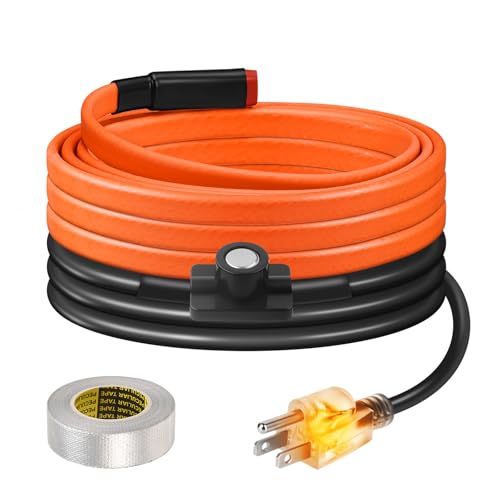
- Temperature control turns heating on below 5°C and off above 15°C.
- IP65 waterproof design for hoses, pipes, tanks, and downspouts.
- Pre-assembled 6-foot cable with a 3-foot power cord.
Best For: Short exposed water lines and seasonal freeze protection
Long-Run Pro
HEATIT 100-Foot Self-Regulating Cable

- 100-foot length covers extensive pipe and drain layouts.
- Adjusts heat output based on ambient temperature.
- ETL-approved tinned copper braid provides grounding.
Best For: Mobile homes and long dry-installation pipe runs
Extreme Winter Flex
YURNOMY 18-Foot Self-Regulating Heat Tape

- Provides freeze protection to -40°F at 5W/FT.
- Fits PVC, PEX, and metal pipes with overlap-safe installation.
- UV-resistant TPE jacket suits outdoor exposure.
Best For: Outdoor plumbing, RV lines, and severe winter conditions
Long-Run Winter Shield
100-Foot VEVOR Self-Regulating Cable

- 100-foot cable for broad pipe coverage
- 5 W/ft output with built-in thermostat
- IP68 waterproof rating and flexible installation
Best For: Long pipe runs and multiple exposed pipe sections
Certified Compact Protection
HEATIT 6-Foot Self-Regulating Cable
- Compact 6-foot length for targeted coverage
- ETL-certified cable and UL-certified plug
- 3 W/ft output for energy-conscious operation
Best For: Short pipe sections and certification-focused buyers
Simple Mid-Size Freeze Guard

- 12-foot length for moderate pipe coverage
- 5 W/ft output with 37°F–55°F thermostat
- Wrap, secure with tape, and plug in
Best For: Single household pipe runs needing simple installation
Best Overall Coverage – HEATIT 40ft Self-Regulating Heat Cable
For longer exposed runs, this 40-foot HEATIT cable is a practical choice among self regulating heat cables for water pipes. Its 3 W/ft output, integrated thermostat, and self-regulating design help protect water lines while limiting operation to colder conditions.
Best For: Homeowners needing freeze protection for medium-to-long metal or plastic pipe runs.
Pros:
- Fully ETL certified, with a UL-certified plug.
- Works with copper, PVC, stainless steel, and other metal or plastic pipes.
- Built-in thermostat activates at 38°F and deactivates at 50°F.
- Rated to maintain water flow in temperatures as low as -40°F.
Cons:
- The 40-foot length may be excessive for short pipe sections.
- Installation requires access to a suitable 120V outlet.
This model balances substantial coverage with energy-conscious operation. Choose it when a 30-foot cable is too short, but you do not need the longer 50-foot option.
Best Short-Run Value – Frost King HC3A 3ft Automatic Heat Cable
The Frost King HC3A is a compact option for shoppers comparing self regulating heat cables for water pipes in small areas. This 3-foot, 120V automatic cable delivers 7 W/ft and is designed for metal and plastic water pipes.
Best For: Short pipe sections where a simple, easy-to-install heating cable is sufficient.
Pros:
- Compact 3-foot length suits small installations.
- Automatic operation helps maintain water flow down to -40°F.
- Compatible with both metal and plastic water pipes.
- Designed for easy installation.
Cons:
- Only covers 3 feet of pipe.
- Uses 7 W/ft, higher than the 3 W/ft HEATIT models.
- The supplied notes do not identify full-cable ETL certification.
Its short length keeps the installation straightforward, but coverage is limited. It is best suited to a specific vulnerable section rather than a long run or a project focused on minimizing wattage.
Best Mid-Length Option – HEATIT 30ft Self-Regulating Heat Tape
This 30-foot HEATIT cable offers balanced coverage for typical residential pipe runs. As self regulating heat cables for water pipes, it adjusts heating output to surrounding conditions and uses a built-in thermostat to help avoid unnecessary operation.
Best For: Medium-length metal or plastic pipe runs where 30 feet of coverage is enough.
Pros:
- Fully ETL certified, with a UL-certified plug.
- Energy-efficient 3 W/ft design.
- Self-regulating operation is designed to prevent overheating.
- Thermostat turns on at 38°F and off at 50°F.
Cons:
- May not cover longer runs as effectively as the 40- or 50-foot versions.
- Requires a nearby electrical connection for its 2-foot power cord.
For many installations, 30 feet is a useful middle ground: enough reach for moderate coverage without the extra cable of a longer model. Confirm your measured pipe length before ordering.
Best for Long Runs – HEATIT 50ft Energy-Saving Heat Cable
When pipe coverage is the priority, this 50-foot HEATIT model is a strong fit among self regulating heat cables for water pipes. It combines 3 W/ft output with self-regulation and an integrated thermostat for extended freeze protection.
Best For: Long exposed water-pipe runs requiring up to 50 feet of coverage.
Pros:
- 50-foot length covers more pipe than the shorter models.
- Fully ETL certified, with a UL-certified plug.
- 3 W/ft design is intended to reduce energy use.
- Works on metal and plastic pipes and protects down to -40°F.
Cons:
- Longer cable may be unnecessary for compact installations.
- Its 2.93-pound weight is greater than the 30-foot model.
This is the most suitable choice in the group when measured coverage approaches 50 feet. For smaller jobs, a shorter cable may be easier to manage and more economical.
Compact Freeze Guard – 6-Foot 8W/FT Heat Tape
For short exposed runs, this 6-foot option is a practical pick among self regulating heat cables for water pipes. Its temperature sensor turns the cable on below 5°C and off above 15°C, while the IP65 waterproof construction is designed for seasonal freeze protection.
Best For: Short water pipes, hoses, RV lines, drain hoses, downspouts, storage tanks, and plant protection.
Pros:
- Temperature-controlled operation helps limit unnecessary heating.
- Pre-assembled with a 3-foot power cord for straightforward installation.
- Supports linear, spiral, or overlapping installation.
- Uses a protective outer sleeve and insulated cable end for outdoor use.
Cons:
- At 6 feet, it is intended for relatively short pipe sections.
- The 8W/FT output may use more power than lower-output cable options.
This is a convenient choice when you need a ready-to-use heating tape for a compact plumbing run and want automatic temperature-based control without separate assembly.
Long-Run Pro – HEATIT 100-Foot Self-Regulating Cable
For extensive plumbing layouts, this HEATIT cable is a strong option among self regulating heat cables for water pipes. The 100-foot self-regulating system adjusts heat output along the cable according to ambient temperature and is designed for residential metal or plastic supply and drain pipes.
Best For: Mobile homes and other dry applications requiring freeze protection across long metal or plastic water and drain pipes.
Pros:
- 100-foot length suits long or multiple pipe runs.
- Self-regulating output helps reduce overheating risk.
- Can be installed straight, spiraled, or overlapped.
- ETL-approved tinned copper braid provides an outer jacket and electrical ground.
Cons:
- The required HTM connection kit must be purchased separately.
- Installation calls for tools and insulation, including glass cloth tape and fiberglass insulation.
- It is specified for dry applications.
This cable makes sense for larger installations where a long run and self-regulating performance matter, but budget for the separate connection kit and required installation materials.
Extreme Winter Flex – YURNOMY 18-Foot Self-Regulating Heat Tape
For exposed plumbing in severe winter conditions, this 18-foot YURNOMY cable offers self regulating heat cables for water pipes with automatic output adjustment. Its 5W/FT, 120V design is rated for freeze protection to -40°F and supports PVC, PEX, and metal pipes.
Best For: Outdoor residential plumbing, RV water systems, farms, barns, cabins, basements, crawl spaces, and roof drainage applications.
Pros:
- Self-regulating core adjusts heat output to surrounding temperatures.
- Designed for temperatures as low as -40°F.
- Safe for crossover and overlap installation.
- UV-resistant TPE jacket helps withstand sunlight, moisture, and outdoor exposure.
Cons:
- The 18-foot length may not cover larger plumbing layouts.
- It is supplied as tape, so installation accessories may need to be sourced separately.
This is a versatile middle-length cable for demanding outdoor use, particularly when compatibility with several pipe materials and overlap-safe installation are priorities.
Long-Run Winter Shield – 100-Foot VEVOR Self-Regulating Cable
For extensive freeze-protection projects, this 100-foot option is one of the more practical self regulating heat cables for water pipes. Its 5 W/ft output, built-in thermostat, and compatibility with plastic hose and metal pipes make it suited to longer pipe runs, outdoor hydrants, basements, valves, and faucets.
Best For: Long pipe runs and multiple exposed water-pipe areas that need one extended cable.
Pros:
- Generous 100-foot length with a 3-foot power cord.
- Built-in thermostat turns on at 43°F and stops at 55°F.
- 5 W/ft heating, IP68 waterproof rating, and a grounded plug with indicator light.
- Flexible installation supports spiral, crossing, or straight layouts.
Cons:
- The 100-foot cable may be more than needed for small repairs or short pipe sections.
- At 5.43 pounds, it is heavier than the shorter alternatives listed here.
This VEVOR cable stands out when coverage matters most. Its long length and flexible installation options can simplify larger freeze-protection layouts, while the integrated thermostat helps limit operation to colder conditions.
Certified Compact Protection – HEATIT 6-Foot Self-Regulating Cable
For a short exposed section, this HEATIT model offers a compact approach to self regulating heat cables for water pipes. The 6-foot, 3 W/ft cable is designed for metal and plastic pipes, with self-regulating output, an integrated thermostat, and ETL certification for the complete cable.
Best For: Short pipe sections where certified, energy-conscious freeze protection is the priority.
Pros:
- Compact 6-foot size for targeted installations.
- ETL-certified heating cable with a UL-certified plug.
- 3 W/ft design is intended to reduce electricity use.
- Works with copper, PVC, stainless steel, and other metal or plastic pipes.
Cons:
- Six feet may not cover longer pipes or multiple sections.
- Its 3 W/ft output is lower than the 5 W/ft models in this roundup.
This is the most compact choice of the three. Its certification details and lower-power design make it appealing for focused installations, while the built-in thermostat activates at 38°F and deactivates at 50°F.
Simple Mid-Size Freeze Guard – 12-Foot Self-Regulating Cable
This 12-foot model provides a straightforward option among self regulating heat cables for water pipes. Its 5 W/ft cable includes a built-in thermostat that turns on at 37°F and off at 55°F, and it can be wrapped around metal or plastic supply, inlet, drainage, or sewer pipes.
Best For: Homeowners protecting a moderate-length pipe section with a simple wrap-and-plug installation.
Pros:
- 12-foot length offers more coverage than a short 6-foot cable.
- 5 W/ft self-regulating heating output.
- Thermostat automatically operates between 37°F and 55°F.
- Designed for easy installation with tape and no professional help required.
Cons:
- The 12-foot length may be insufficient for larger pipe networks.
- No included components are listed in the supplied details.
This cable balances coverage and simplicity. It is a sensible middle-ground pick for a single household pipe run, especially when you want higher output than the 3 W/ft compact option without stepping up to a 100-foot roll.
How We Picked the Best Self Regulating Heat Cables for Water Pipes
We compared these cables by heating output, available lengths, thermostat or automatic-control features, stated pipe compatibility, certification claims, and installation practicality. Self-regulating designs adjust heat output as temperatures change, which can help reduce energy use and lower the risk of overheating when installed correctly.
We also considered the needs of different buyers: short exposed sections near faucets, long runs in crawl spaces or mobile homes, and larger-diameter PVC, plastic, or metal piping. Always verify the manufacturer’s installation instructions, maximum exposure limits, and whether the cable can be used beneath insulation.
Quick Comparison
| Best For | What to Look For | Typical Choice |
|---|---|---|
| Short pipe sections | 6–12 feet and simple installation | Compact cable with clear end termination |
| Average household runs | 18–50 feet and 3 W/ft output | Self-regulating cable sized to the full pipe length |
| Long or remote runs | 100-foot options and durable construction | Long cable with suitable power connection |
| Coldest conditions | Higher wattage, insulation, and thermostat control | 5–8 W/ft cable where approved by the manufacturer |
Key Buying Factors for Self-Regulating Heat Cables for Water Pipes
Length and Layout
Measure the exposed pipe, valves, fittings, and any sections that need extra coverage. Do not assume a cable can be cut unless the product specifically permits it. Leave enough slack for the power connection, but avoid overlapping the cable unless the instructions expressly allow it.
Heat Output
Most residential options fall around 3 W/ft, while higher-output models may be better suited to severe cold or poorly protected areas. More wattage is not automatically better: excessive heat can damage some plastic piping or insulation systems. Follow the cable’s approved pipe-material and temperature guidance.
Controls, Safety, and Installation
A thermostat or automatic control can reduce unnecessary operation, but it does not replace correct installation. Check the required voltage, plug type, circuit protection, outdoor rating, and certification. Install the cable in direct contact with the pipe, secure it with approved tape or fasteners, and add compatible insulation when recommended. Never cover a cable with materials that are not approved for heat-trace use.
Pipe Compatibility
Confirm that the cable is rated for your pipe material, whether PVC, PEX, copper, steel, or another plastic or metal type. Some cables are designed for straight runs, while others may accommodate specific layouts around fittings. Keep the cable away from sharp edges and inspect it for damage before installation.
Who Should Buy Which Self Regulating Heat Cables for Water Pipes?
Choose a short 6- or 12-foot cable for a small vulnerable section, such as an exposed supply line under a sink or near an exterior wall. An 18- to 50-foot, 3 W/ft model is a practical fit for many household pipe runs. Buyers protecting a mobile home, outbuilding, crawl space, or long service line should consider a 100-foot option, provided the electrical connection and installation method are suitable.
For especially cold, windy, or poorly insulated locations, prioritize an appropriately rated higher-output cable and pair it with proper pipe insulation. If you want simpler seasonal operation, choose a model with a built-in thermostat or automatic control. In every case, measure first, verify compatibility, and use a properly grounded, code-compliant power source.