
Is your hot water heater giving you weak water flow when you turn on the tap? Low water pressure from your heater can be frustrating and disrupt your daily routine.
You might wonder why this is happening and how to fix it quickly. You’ll discover the common reasons behind hot water heater low pressure and easy steps you can take to restore strong, steady water flow. Keep reading to get your hot water working just the way you want it.
Credit: accurateplumbingtx.com
Causes Of Low Hot Water Pressure
Low hot water pressure can disrupt daily routines and cause frustration. Several common issues can reduce the flow of hot water in your home. Understanding these causes helps you find the right solution quickly.
Sediment Buildup In Tank
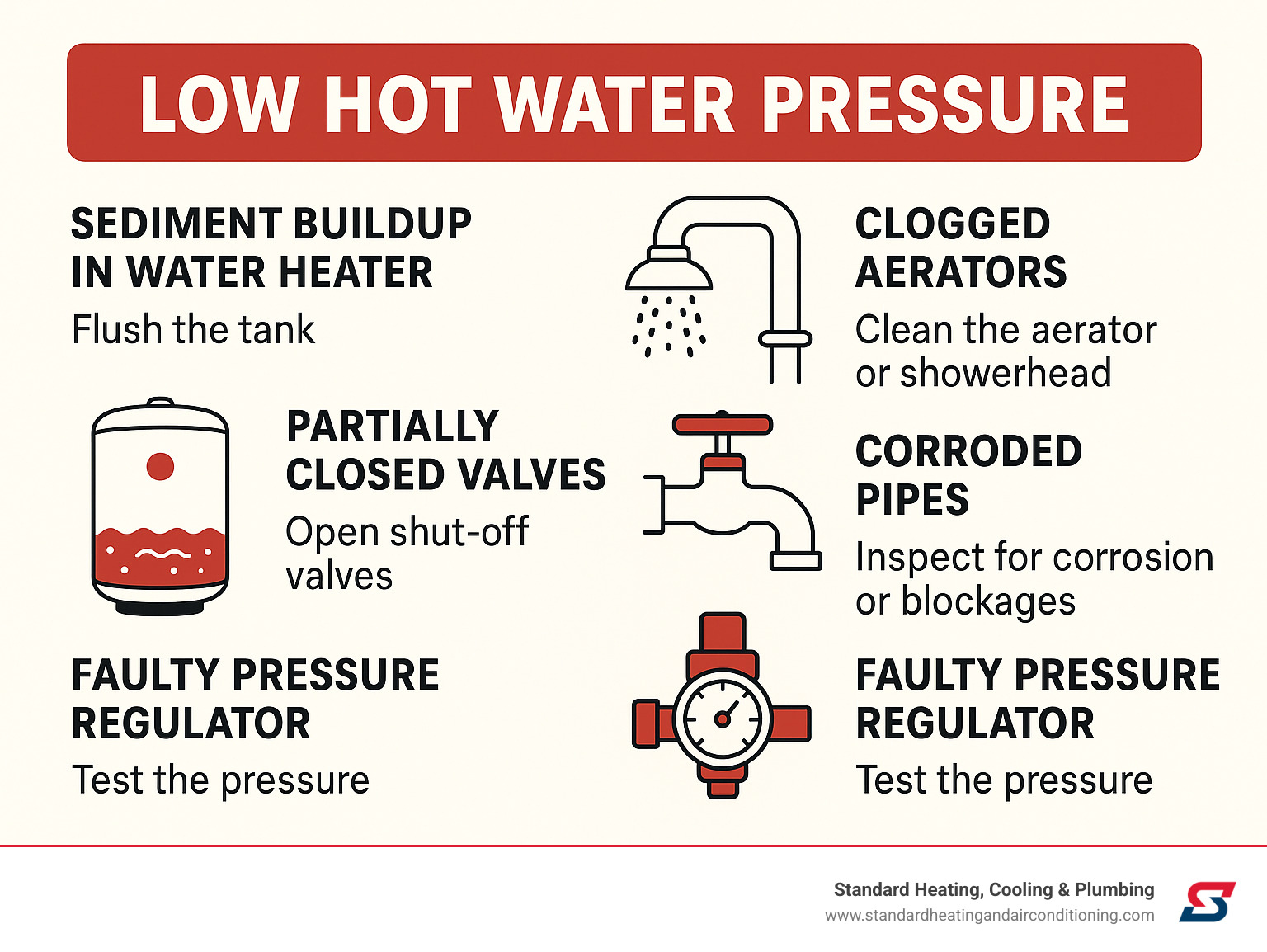
Minerals from water settle at the bottom of the heater tank. This sediment layer blocks water flow and lowers pressure. Regular tank flushing can prevent buildup and keep water pressure steady.
Corroded Pipes And Fixtures
Old or rusty pipes reduce water flow inside the plumbing system. Corrosion narrows the pipes, limiting hot water pressure. Replacing damaged pipes restores proper flow and improves pressure.
Faulty Pressure Regulator
The pressure regulator controls water pressure entering your home. A broken regulator can lower hot water pressure. Checking and replacing this part ensures consistent water flow.
Leaking Or Damaged Valves
Valves control water direction and flow within the heater. Leaks or damage cause pressure loss and reduce hot water supply. Repairing or changing valves helps maintain steady pressure.
Water Supply Issues
Problems from the main water source impact hot water pressure. Low municipal water pressure or supply interruptions lower flow. Contacting your water provider clarifies supply conditions and solutions.
Checking Your Water Heater
Checking your water heater is important when water pressure feels low. A careful look can reveal hidden problems. Simple checks can save time and money. Start by examining the main parts and test the pressure at different spots. Watch for leaks or rust that may cause issues.
Inspecting The Tank And Connections
Look closely at the water heater tank for dents or damage. Check all pipe connections for tightness. Loose fittings can reduce water pressure. Make sure valves are fully open. Clear away any dust or debris around the heater. This keeps it working well and safe.
Testing Water Pressure At Different Points
Measure water pressure at the heater’s outlet first. Use a pressure gauge for accurate results. Then, test pressure at faucets in your home. This shows if pressure drops after the heater. Low pressure at the heater means a problem inside. If pressure is low at faucets only, pipes could be clogged.
Identifying Signs Of Leaks Or Corrosion
Look for water stains or puddles near the heater. Corrosion appears as orange or green rust on pipes. Leaks cause pressure loss and can damage floors. Small leaks may drip slowly but still affect pressure. Fix leaks quickly to avoid bigger problems later.
Simple Fixes To Boost Pressure
Low water pressure in your hot water heater can be frustrating. Simple fixes can restore good water flow quickly. These easy steps help improve water pressure without costly repairs. Follow these tips to enjoy stronger hot water at every tap.
Flushing The Water Heater Tank
Mineral buildup inside the tank blocks water flow. Flushing the tank removes this buildup. Turn off the heater and let it cool. Attach a hose to the drain valve and drain the water. Flush until clear water runs out. This clears sediment and improves pressure.
Cleaning Or Replacing Showerheads And Faucets
Clogged showerheads and faucets reduce water pressure. Remove them and soak in vinegar to clean. Use a brush to clear tiny holes. Replace old or damaged fixtures for better flow. Clean fixtures make a noticeable difference.
Adjusting Or Replacing Pressure Regulators
Pressure regulators control water flow into your home. Sometimes they are set too low or become faulty. Locate the regulator near the main water line. Turn the adjustment screw to increase pressure slightly. Replace it if damaged or not working properly.
Tightening Or Replacing Valves
Loose or damaged valves cause leaks and low pressure. Check all valves connected to the heater and pipes. Tighten any loose valves with a wrench. Replace valves that are worn or broken. Proper valve function supports steady water pressure.
When To Call A Professional
Knowing when to call a professional for your hot water heater is important. Some issues need expert help to avoid bigger problems. Quick action can save money and keep your home safe.
Persistent Low Pressure Issues
Low water pressure that does not improve after basic checks needs professional attention. Experts can find hidden problems like mineral buildup or pipe damage. They have tools to fix these issues properly.
Major Repairs Or Replacements
Big problems such as leaks, strange noises, or no hot water require a technician. Professionals decide if repair or replacement is best. They ensure the work meets safety standards and works well.
Safety Concerns And Inspections
Gas or electric water heaters may pose safety risks. Strange smells, flickering pilot lights, or leaks are warning signs. A professional can inspect and fix these dangers before accidents happen.
Preventing Future Pressure Drops
Low water pressure in your hot water heater can cause many problems. It reduces water flow and makes daily tasks harder. Preventing future pressure drops keeps your water heater working well. Simple steps help maintain steady pressure and avoid costly repairs.
Regular Maintenance Tips
Check your water heater regularly. Drain the tank to remove sediment. Sediment buildup blocks water flow and lowers pressure. Clean the inlet screen to stop debris from entering. Replace old or worn parts to keep the system efficient. Small fixes prevent big problems later.
Using Water Softeners
Hard water causes mineral buildup inside pipes and heaters. This buildup lowers water pressure over time. Water softeners remove minerals and protect your system. They help keep pipes clear and improve water flow. Using a water softener extends your heater’s life.
Monitoring Water Quality
Test your water quality often. High levels of minerals or chemicals harm your heater. Knowing water quality helps you take action early. Use filters to reduce harmful substances. Clean water supports good water pressure and heater health.
Scheduling Routine Inspections
Hire a professional to inspect your water heater yearly. Experts find issues before they worsen. Inspections ensure all parts work properly. Routine checks save money and keep pressure steady. Trust the pros for safe and effective service.
Credit: www.standardheatingandairconditioning.com

Credit: www.reddit.com
Frequently Asked Questions
What Causes Low Water Pressure In Hot Water Heaters?
Low pressure often results from sediment buildup, valve issues, or pipe leaks. Mineral deposits block water flow. Checking valves and pipes helps identify the problem quickly.
How Can I Increase Hot Water Heater Pressure?
Flush the tank to remove sediment. Inspect and clean or replace faulty valves. Ensure pipes are intact and free from leaks to restore pressure.
Is Low Hot Water Pressure A Sign Of Heater Failure?
Not always. It may indicate maintenance issues like clogs or leaks. However, persistent low pressure can signal a failing heater needing professional inspection.
Can Sediment Buildup Lower Hot Water Heater Pressure?
Yes. Sediment accumulates over time, restricting water flow inside the tank. Regular flushing prevents buildup and maintains optimal pressure and heater efficiency.
Conclusion
Low water pressure in your hot water heater can cause many issues. It affects comfort and daily tasks like showering or washing dishes. Fixing the problem early saves time and money later. Check pipes, valves, and filters regularly to spot trouble.
Simple maintenance helps keep water flow steady and strong. Don’t ignore weak pressure; it may signal bigger problems. Taking small steps now ensures your hot water works well every day. Stay aware and act quickly for a reliable hot water supply.