
Is your water heater running non-stop, making your energy bills skyrocket? You might feel frustrated and unsure why it won’t stop heating.
This problem isn’t just annoying—it can also be dangerous and costly. But don’t worry, you’re not alone, and there are simple reasons behind this issue. You’ll discover what causes your water heater to keep heating and how you can fix it before it turns into a bigger problem.
Keep reading to save money, stay safe, and get your hot water back under control.
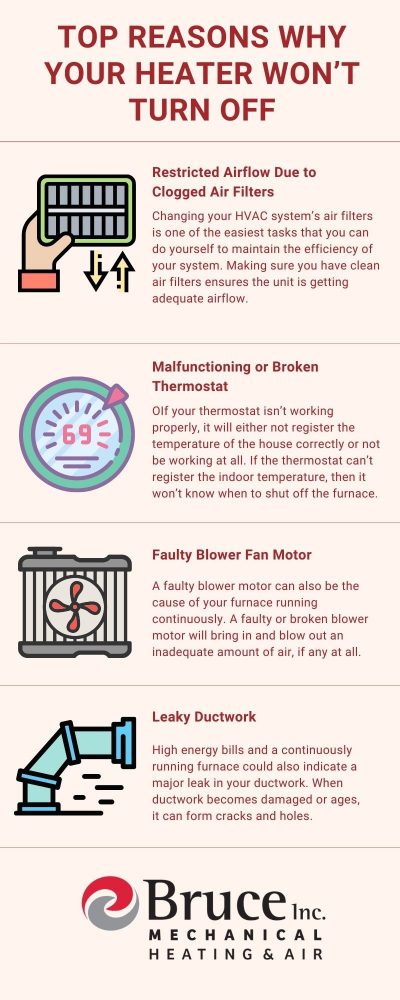
Credit: bruceinc.com
Common Causes
Water heaters that won’t stop heating can cause high energy bills and even damage. Understanding common causes helps you identify and fix problems quickly. Several issues inside the water heater can make it run nonstop.
Faulty Thermostat
The thermostat controls the water temperature. If it breaks, the heater may keep heating endlessly. A faulty thermostat cannot sense the right temperature. It sends wrong signals to the heating element. This causes the element to stay on all the time.
Stuck Heating Element
The heating element warms the water inside the tank. Sometimes, it gets stuck in the “on” position. A stuck heating element keeps heating water without stopping. This leads to overheating and possible damage to the water heater.
Wiring Issues
Loose or damaged wires can cause electrical problems. Faulty wiring may send continuous power to the heater. This makes the heating system run nonstop. Wiring issues also increase the risk of electric shocks or fire.
Sediment Buildup
Over time, minerals settle at the bottom of the tank. This sediment covers the heating element. It makes the element overheat and stay on longer. Sediment buildup reduces efficiency and causes the heater to run more than needed.

Credit: www.reddit.com
Safety Precautions
Water heaters that keep heating can be dangerous. Taking safety steps is very important. These simple actions can protect you and your home from harm. Follow these safety tips before doing anything else.
Turn Off Power
First, cut the power to the water heater. Find the circuit breaker and switch it off. This stops electricity from flowing. It helps avoid shocks and fire risks.
Check For Leaks
Look around the water heater for any water leaks. Leaks can cause electric shocks or damage. Also, leaking water can make the floor slippery. Fix leaks before touching the heater.
Use Protective Gear
Wear gloves and safety glasses. These protect your hands and eyes from hot water or debris. Use clothes that cover your skin well. Safety gear helps prevent injuries during repairs.
Quick Fixes
Quick fixes can help you stop your water heater from overheating. These simple steps often solve the problem without needing a professional. Try each fix carefully to see if it works for your heater.
Reset The Thermostat
First, try resetting the thermostat. Turn off the power to the heater. Locate the reset button, usually on the thermostat panel. Press and hold it for a few seconds. This can clear any errors and stop overheating.
Replace Thermostat
If resetting does not help, the thermostat might be faulty. A broken thermostat can cause the heater to run constantly. Buy a new thermostat that matches your model. Turn off power before replacing it for safety.
Clean Heating Element
Mineral buildup on the heating element can cause overheating. Turn off the power and drain the tank. Remove the heating element and clean it with a brush. This improves heating efficiency and stops constant heating.
Flush The Tank
Flushing the tank removes sediment that affects heater performance. Connect a hose to the drain valve and empty the tank. Flush with water until clear. This keeps the heater working well and avoids overheating.

Credit: teamaustin.com
When To Call A Professional
Knowing when to call a professional is key for water heater problems. Some issues need expert help to avoid damage or safety risks. Quick action can save money and keep your home safe.
Persistent Heating
If your water heater keeps heating nonstop, this is a serious issue. It wastes energy and can cause the tank to overheat. A professional can check the thermostat and controls. They can fix or replace parts to stop the problem.
Electrical Concerns
Water heaters use electricity and can be dangerous. Sparks, burning smells, or tripped breakers need expert attention. Electric issues can cause fires or shocks. Only a trained technician should handle electrical repairs.
Complex Repairs
Some water heater problems are hard to fix. Issues like broken heating elements or leaking tanks need special tools. Professionals have the right skills and equipment. They ensure the repair is safe and long-lasting.
Preventive Maintenance
Preventive maintenance helps keep your water heater working properly. It stops small issues from becoming big problems. Regular care saves money and extends the heater’s life.
Simple checks and cleaning can prevent the heater from overheating. These steps keep the water temperature steady and safe.
Regular Flushing
Flush your water heater at least once a year. This removes sediment buildup inside the tank. Sediment can cause overheating and damage. Flushing keeps the heater efficient and lasting longer.
Thermostat Checks
Check the thermostat settings regularly. The ideal temperature is around 120°F (49°C). Too high can cause constant heating and waste energy. Adjust the thermostat to stop overheating and save power.
Inspect Wiring
Look at the wiring for any damage or loose connections. Faulty wiring can cause the heater to overheat. Turn off the power before inspecting. Tighten or replace wires as needed to keep it safe.
Annual Professional Service
Hire a professional to inspect and service your heater once a year. They can find hidden problems and fix them early. A professional check keeps the heater safe and reliable all year.
Frequently Asked Questions
Why Won’t My Water Heater Stop Heating?
A faulty thermostat or heating element often causes continuous heating. It fails to signal the heater to shut off, leading to overheating.
Can A Malfunctioning Thermostat Cause Overheating?
Yes, a malfunctioning thermostat can misread water temperature. This makes the heater run endlessly, raising energy costs and risking damage.
How To Fix A Water Heater That Keeps Heating?
First, turn off power to the heater. Check and replace the thermostat or heating element if defective. Call a professional if unsure.
Is Continuous Heating Dangerous For Water Heaters?
Yes, it can cause overheating, increasing pressure and risk of tank damage or explosion. It also wastes energy and raises utility bills.
Conclusion
A water heater that won’t stop heating can waste energy and cause damage. Check the thermostat and reset it if needed. Sometimes, the heating element or valve may need repair or replacement. Turn off power before any work. Regular maintenance keeps your heater working well.
Don’t wait too long to fix the problem. Stay safe and save money by acting early. A well-functioning heater brings comfort and peace of mind. Simple steps can prevent bigger issues later on.