Are you confused about the right settings for your water heater thermostat? You’re not alone.
Getting your thermostat settings just right can save you money, keep your water comfortable, and even extend the life of your heater. In this guide, you’ll discover the simple ABCs of water heater thermostat settings—easy steps you can take today to make sure your hot water works perfectly for you.
Keep reading, and you’ll learn how to avoid common mistakes and get the most from your water heater without wasting energy or risking burns.

Credit: www.marsu.edu.ph
Ideal Thermostat Temperatures
Setting the right temperature on your water heater thermostat is important for comfort and safety. It also helps save energy and lowers utility bills. Choosing the ideal temperature keeps your water hot enough for daily use without wasting power or causing burns.
Most homes find a balance with a thermostat that avoids scalding and prevents bacteria growth. Finding this balance protects your family and your wallet. Adjusting the thermostat based on the season can improve efficiency and comfort.
Recommended Settings For Safety
Experts suggest setting your water heater thermostat to 120°F (49°C). This temperature kills harmful bacteria like Legionella. It also reduces the risk of burns, especially for children and elderly people.
Temperatures above 120°F can cause serious burns quickly. Keeping it at or below this level is safer for everyday use. This setting works well for most households.
Energy Efficiency Tips
Lowering your thermostat to 120°F can save energy and money. Every 10°F drop can cut your water heating costs by 3 to 5 percent. Avoid setting the temperature higher than necessary.
Insulate your water heater and pipes to keep heat inside. This reduces energy loss and keeps water hotter for longer. Use timers or smart controls to heat water only when needed.
Adjusting For Seasonal Changes
In winter, you may need to raise the thermostat slightly. Cold incoming water lowers the tank temperature faster. Increasing the setting by 5 to 10 degrees helps maintain hot water supply.
During summer, lower the thermostat to save energy. Warm incoming water means less heating is required. Small adjustments each season improve comfort and reduce costs.
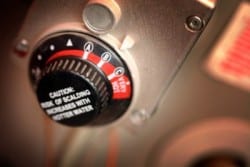
Credit: rshinspections.com
Types Of Water Heater Thermostats
Water heater thermostats control the water temperature inside your heater. They help keep water warm and safe. Different types of thermostats offer various features and benefits. Knowing these types helps you choose the right one for your home.
Thermostats mainly come in mechanical and digital forms. Smart thermostats add more control and convenience. Compatibility with your heater is important for proper function.
Mechanical Vs Digital Controls
Mechanical thermostats use a simple dial or knob. They work by sensing water temperature with a metal sensor. These controls are easy to use and affordable. Digital thermostats show the temperature on a screen. They allow precise temperature settings. Digital controls often have buttons for easy adjustment. Both types regulate water temperature effectively.
Smart Thermostat Features
Smart thermostats connect to Wi-Fi for remote control. You can change settings using a smartphone app. They offer energy-saving modes and schedules. Some models learn your habits and adjust automatically. Alerts notify you of unusual temperature changes. Smart features improve comfort and reduce energy use.
Compatibility With Different Heaters
Not all thermostats fit every water heater. Check your heater’s model and type before buying. Mechanical thermostats suit many traditional heaters. Digital and smart thermostats often require newer models. Proper compatibility ensures safety and efficient heating. Installing the right thermostat avoids damage and saves energy.
How To Adjust Your Thermostat
Adjusting your water heater thermostat is simple. It helps save energy and avoid scalding. Knowing the right temperature setting keeps your water comfortable and safe.
Step-by-step Adjustment Process
First, turn off the power to the water heater. This prevents any electrical accidents.
Next, remove the thermostat access panel. Use a screwdriver if needed.
Locate the thermostat dial. It usually has numbers or temperature marks.
Use a flathead screwdriver to turn the dial. Set it to 120°F (49°C) for safety and efficiency.
Replace the access panel and turn the power back on.
Wait a few hours and test the water temperature.
Tools You’ll Need
- Flathead screwdriver
- Phillips screwdriver (sometimes needed)
- Thermometer (optional, for accurate reading)
- Flashlight (if the area is dark)
Common Mistakes To Avoid
Do not adjust the thermostat without turning off power.
Avoid setting the temperature above 120°F. It risks burns.
Do not guess the temperature. Use a thermometer if unsure.
Never force the thermostat dial. It can break easily.
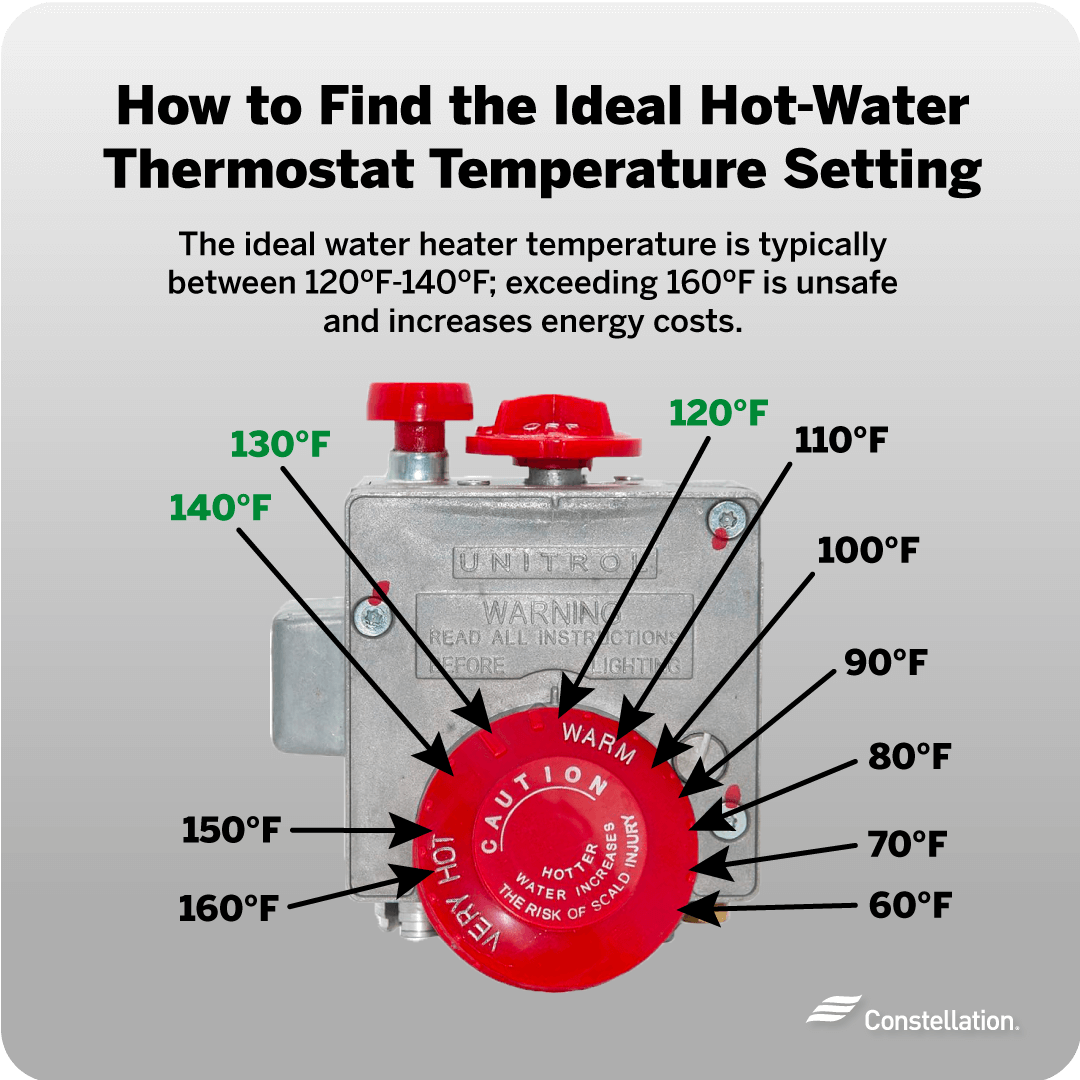
Credit: www.constellationhome.com
Troubleshooting Temperature Issues
Troubleshooting temperature issues with your water heater thermostat is important. It helps keep your water at the right temperature. Problems like water too hot or cold can waste energy and cause discomfort. Knowing how to spot and fix these issues saves time and money. Below are common problems and solutions to help you maintain the perfect water temperature.
Water Too Hot Or Too Cold
Water that is too hot can cause burns. Water too cold makes showers uncomfortable. Start by checking the thermostat setting. Most water heaters work well at 120°F (49°C). Adjust the thermostat up or down in small steps. Wait a few hours to check the water temperature again. If it stays too hot or cold, the thermostat may be faulty.
Inconsistent Heating Problems
Inconsistent heating means water temperature changes unexpectedly. This can happen if the thermostat is loose or broken. Sediment buildup in the tank also affects heating. Flush the tank to remove sediment. Check the thermostat connection and tighten if needed. If the problem continues, the thermostat or heating element might need replacement.
When To Call A Professional
Some problems need expert help. Call a professional if you smell gas or see leaks. If the thermostat or heating element needs replacement, a technician can do it safely. Electrical problems also require a professional. Avoid risks by hiring an expert for complex repairs. Regular maintenance by a professional keeps your water heater running well.
Energy Savings And Safety Tips
Setting your water heater thermostat correctly saves energy and keeps your home safe. Small changes make a big difference. Follow these simple tips to lower energy use and avoid accidents.
Preventing Scalding Risks
Set the thermostat to 120°F (49°C) to stop burns. Hotter water can cause serious injuries quickly. Check your water temperature regularly. Use anti-scald devices on faucets and showers. These protect children and elderly family members.
Reducing Energy Bills
Lower the thermostat to 120°F to cut energy costs. Each 10°F drop saves about 3-5% on heating bills. Turn off the heater when away for long periods. Insulate your water heater and pipes to keep water warm longer. These steps reduce wasted energy and save money.
Maintenance For Optimal Performance
Flush your water heater once a year to remove sediment. Sediment buildup lowers efficiency and wastes energy. Test the thermostat and heating elements regularly. Replace parts if they do not work well. Proper maintenance extends your heater’s life and keeps energy use low.
Frequently Asked Questions
What Is The Ideal Water Heater Thermostat Setting?
The ideal setting is 120°F (49°C). It balances energy efficiency and safety. It prevents scalding and reduces energy bills.
How Does Thermostat Setting Affect Energy Consumption?
Higher settings increase energy use. Lower settings save energy but may reduce hot water supply. Proper setting optimizes efficiency.
Can I Adjust My Water Heater Thermostat Myself?
Yes, most thermostats are adjustable. Turn off power before changing settings. Refer to your heater’s manual for instructions.
Why Is My Water Heater Thermostat Not Heating Properly?
A faulty thermostat, sediment buildup, or electrical issues can cause poor heating. Regular maintenance helps prevent problems and ensures efficiency.
Conclusion
Setting your water heater thermostat correctly saves energy and money. It keeps water at a safe and comfortable temperature. Avoid setting it too high to prevent burns and reduce wear. Check your thermostat regularly to maintain efficiency. Small changes make a big difference in your daily comfort.
Use these tips to enjoy warm water without wasting power. Stay safe and save with the right thermostat settings. Simple steps lead to better water heater performance.